One of your browser extensions seems to be blocking the video player from loading. To watch this content, you may need to disable it on this site.
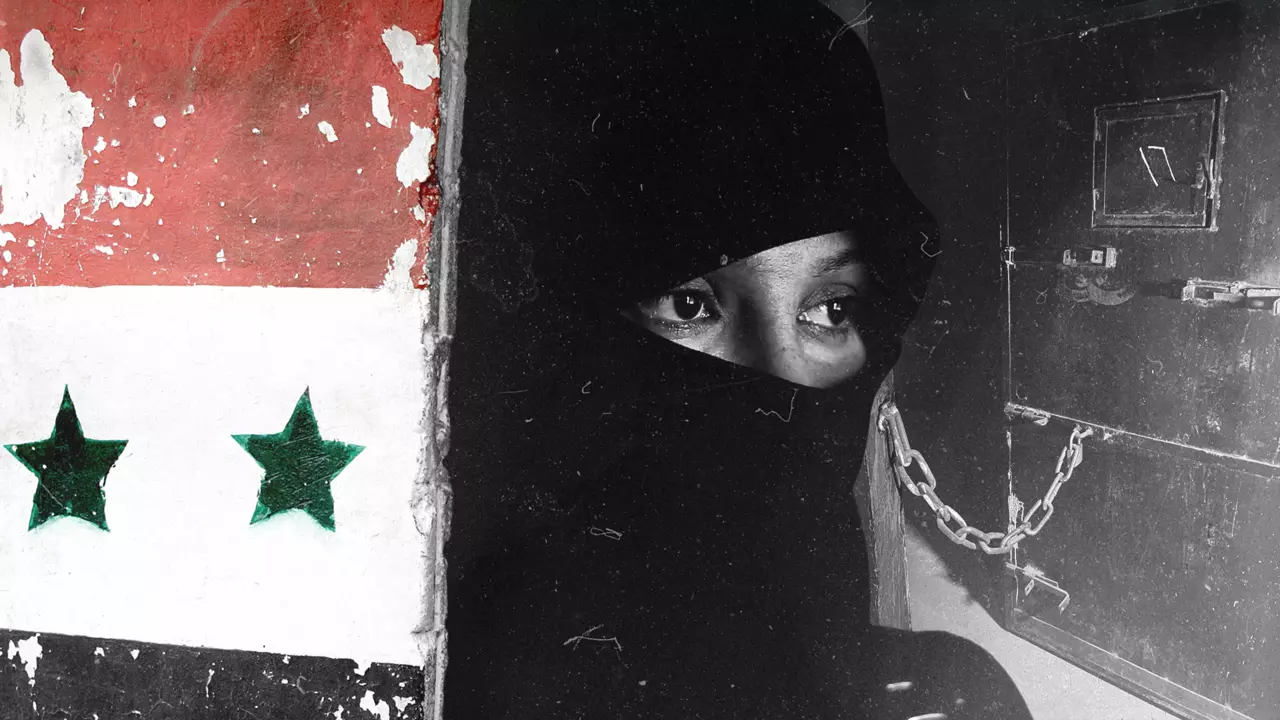
Three women who endured rape, sexual violence and torture in Bashar al-Assad’s jails during the 2011- 2024 Syrian civil war agreed to recount their ordeals to FRANCE 24. Since the subject is extremely taboo and could endanger the lives of these women, they testified anonymously. The names have been changed and certain details omitted to protect their safety.
Warning: Some of the scenes recounted by the victims may be disturbing to readers.
These testimonies have been translated from Arabic.
Watch moreRape: Assad's weapon against Syrian women
Asma: ‘I was raped 13 times’
Asma, 43, was born into a family of pro-regime officers. She was arrested in 2016 for treating and helping the besieged population of Eastern Ghouta, an eastern suburb of Damascus. Sentenced to 15 years in prison, Asma was released after one year as part of a prisoner exchange between the government and a rebel group. She now lives in Turkey.
"I was accused of participating in anti-regime demonstrations, terrorism, and also “sexual jihad” [a controversial concept whereby Muslim women sympathetic to a cause offer themselves to fighters in the name of holy war] – like most of the female prisoners. I was sentenced to 15 years in prison and sent to Adra [a town northeast of Damascus], where I stayed for nine months.
One morning, I was taken with two other prisoners to the Palestine branch [the notorious Branch 235 prison operated by Assad’s military intelligence directorate] and placed in solitary confinement.
Read moreThe Palestine Branch: A den of torture in Assad’s Syria
The torture began when my name appeared on a list of prisoners to be exchanged between the Syrian army and a rebel group. The first time I was tortured, three men were hanging from the wall. There were two of us women. They asked another prisoner to undress me so they could search me … even my private parts. It was inhuman. I remained in my underwear throughout my detention.
Every day, the interrogations official and a “collaborator” prisoner would choose a prisoner to offer to the officer from among the new arrivals. He would change his "toy" every two or three days, otherwise he would get bored.
Unfortunately, after three days, they chose me. The first rape was the worst. It was cold that night. I remember every second of it. It lasted about four hours. I know this because the officer’s shift usually started at 1am and then I heard the [dawn] call to prayer. I was blindfolded and taken to his office. I heard the word “Sidi” [or Sir] amid the commotion. He told me his name was Hassan and that he was from Damascus. “That way, when you leave tomorrow, you can say that Hassan raped you.”
I could smell the arak. He was completely drunk … he even spilled some [arak] on me … his speech was slurred, heavy. I couldn't see anything. All I could feel were the hard restraints on my wrists. I knew it was a military bed because of the metal. That's where I was assaulted. I tried to convince myself that I wasn't there. When he was done, I went back to my cell in my underwear. Without washing. It was impossible in Palestine. I stayed like that for 18 days.
He raped me three times in his office. I don't know who the others were. It happened in the interrogation room. That's where they tortured the prisoners, both men and women. There were four or five of them each time. They raped me with their fingers, their hands ... with everything. The pain was unbearable. I was blindfolded, but I could hear their voices.
There were men hanging from the wall [the “shabeh” stress position wherein prisoners are suspended by their wrists]. The more the detainees begged them to stop, the more they assaulted me. When they assaulted me with sharp objects in my private parts, it was a way of torturing a man hanging on the wall. He screamed louder than me, even though I was the one being tortured. They did this to scare him. Once, they shoved an iron bar into my vagina. I told God that I didn't want to go out. I just wanted to die.
I was raped 13 times. I counted them like I counted the number of steps to the Palestine Branch. I will never be able to forget the naked men, tortured or raped before my eyes. Seeing others being raped was a way of torturing us. It was harder than my own rape.
I saw a soldier from Deir Ezzor [in eastern Syria] have both his arms cut off with an electric saw because he had defected. The officer watched him while drinking his maté and listening to “Tirach Rach” – the song I hate the most in the world today. I spent 18 days in the branch and heard it every day. He took pleasure in watching a female prisoner being burned with plastic or silicone. He had no feelings.
After my release, I decided to flee to Turkey with my children. Once in [the southern Turkish city of] Gaziantep, I realised I was five months pregnant. I came out of prison with scars, but I couldn't keep this one [the child]. This pregnancy had to end. I would have been unable to tell him he was the result of rape. I tried to get a fatwa [a legal ruling in Islamic law], but the mufti told me it was haram [wrong under Islamic law]. I tried to get an abortion pill, but it wasn't possible. Then, while searching on YouTube, I learned that chlorine could help. I mixed Pepsi with chlorine. And it was gone.
I can forget the rape and the pregnancy, but I will never be able to forget the abortion. For me, it's as if I had killed someone. I am incapable of hurting an insect. It's the hardest thing. If I fall asleep without being knocked out by sleeping pills, I wake up suddenly thinking I'm still in the Palestine Branch. I lost a part of myself in prison. My body got out, but my soul stayed behind. I can forget my rape, but I can't forget the rape of the men in front of my eyes.
Fortunately, I don't know his face [referring to Hassan, the officer who first raped her]. I can forgive him if it helps rebuild Syria and my children can live in safety. But not the female [collaborator] prisoner who chose me for his amusement. Never. It's the most revolting thing in the world.
What's important is that the person who sees this report knows what happened in Assad's prisons and why people decided to revolt against this regime. I'm doing this to give a voice to the women who died, those whose bodies disappeared."
One of your browser extensions seems to be blocking the video player from loading. To watch this content, you may need to disable it on this site.

Yasmine: ‘When the first one finished, another one took over’
Yasmine, 32, was arrested in 2015. She was accused of being linked to “terrorists” and of engaging in sexual jihad. She spent about four months in prison. She lives in Syria.
“The torture began as soon as I arrived. I was blindfolded. There wasn’t really an interrogation. They were just pretending. They asked one or two questions, then they insulted and tortured me. I was in the basement. The officer started saying to me, “You’re beautiful, I love your body, your buttocks.” He took me to his office and showed me men's belts. He said, “See these? All these men are dead. And you are going to die today at 4 o'clock.” I believed him. I just asked him to tell my parents that I had died in this branch.
Then the interrogation began. He asked me questions about my family and my studies. When I said the word “revolution,” he flew into a rage. He told me it was “a crisis”. He hit me. Everywhere, everywhere. He called me a “whore” and all sorts of names. I don't know how long it lasted. Then they put me in solitary confinement. Without giving me anything to eat. In the evening, I was interrogated again.
The rapist's name was Nader. He wasn't an officer. He was a real piece of trash. He came to get me and took me to an office. He was alone. I was so scared that my legs were shaking. I couldn't stop them. He took a glass of water, poured something into it, and it turned white like milk [diluting arak with water turns the clear liquids milky]. He said, “Drink.” I told him it wasn't good, but he insisted that I continue. I started vomiting. Vomit, vomit. He kissed me. He stank. I had no strength left and, above all, I wasn't used to drinking. He pinned me against the wall, then on the floor. At first, I didn't understand what was happening. I was very young. I was barely 22 years old. I was a virgin. And then he raped me. Many times. First from behind. Then from the front. The pain was unbearable. Unimaginable. I bled a lot, but they didn't give me anything afterwards. I couldn't even wash myself because there was no bathroom. I stayed like that for 25 days, until the next branch. I was raped about 15 times.
Read moreSeven years of torture by Assad’s executioners: ‘I will never forgive them’
I was then transferred to Kafr Sousa (Branch 215 in Damascus, also known as the “Branch of Death”), where I stayed for about three months. As soon as we arrived, they forced us to undress. I was completely naked. The soldiers watched us and laughed. They left us like that, then gave us our underwear and sent us to our cells. There were 40 women inside. I was the youngest.
We took turns sleeping: 20 stayed awake while the other 20 slept on their sides, pressed up against each other. Day and night. Sometimes the new arrivals were forced to stay in the toilets. Opposite our cell, the prisoners were minors. They were between 13 and 15 years old. We could see them when the doors were opened to give us food.
In Branch 215, we were given pills every day around noon. I thought they were for my head. I didn't know what they were until the married women explained to me that they were contraceptive pills. I didn't have my period in the branch and for several months after my release.
Five days after my arrival, I was raped again. It was after an interrogation. The interrogator – always the same one, because I recognised his voice – never asked me any questions except when the branch director was there. Otherwise, he talked to me about the underwear I liked to wear. He asked me about the size, the colour ... I was interrogated three or four times in total. Then I was raped by the jailers. It took place in the archive room. There was a desk and metal cabinets. My hands were tied, but I wasn't blindfolded. They put my hands on the desk and a piece of sponge in my mouth. One soldier raped me and two others stood at the door to watch. When the first one had finished, another took over. And so on.
I was raped many times. I stopped counting. It was always in the same room. I couldn't feel anything anymore. I didn't want to leave, I was praying for death. I wanted it to end. I was just afraid of what my parents would think of me. I even thought about killing myself.
Torture took place every day or every other day … the branch director would put us in the hallway in the middle of the night and have us beaten. The female prisoners were interrogated in the hallway, blindfolded. We were then taken to the torture chamber. Our eyes were no longer covered. There were men hanging on the wall. One of them had no flesh left on his back. You could see his spine. Some were dead, others had lost consciousness. There was blood everywhere on the floor. Horrible scenes. I will never be able to forget them. Nor the screams. My God, why all this, why? I’m not sure there’s any punishment on this Earth for these criminals for what we have suffered.
Alhamdulillah [praise be to God], today I’m married. Our relationship is a little strange. He is a good husband. He is kind. But I don't like it when he gets close to me. The smell of Nader never leaves me, not even for a single day. It doesn't go away. I smell it everywhere. It's inside me. Sometimes I feel like he's really there.
Today, I suffer from society's judgmental gaze. The rape itself was less difficult than [the comments] I heard [from people] outside [the prisons]. It’s especially painful when it comes from people who know you. People who are close to you.
I am speaking out to denounce the injustice we are experiencing. People say to us, “You are ex-prisoners, so what? Men have been through a lot too.” But it's different. We have been broken. We died inside. Those who committed these horrors are living their lives. They took everything from us. We became outcasts. We didn't ask to be imprisoned or raped. Most of the women who were released found themselves without husbands. Some emerged pregnant. What we went through is unjust. Bashar stole our lives."
Houda: ‘Torture is easier than rape’
Houda, 28, hails from a family who supported the revolution, but her husband was pro-regime. In 2015, she was arrested and accused of sexual jihad, like most of the women arrested by the Assad regime during the civil war. She spent nearly four months in the Palestine Branch. She lives in Syria.
"I went through everything in the Palestine Branch. The first thing was the beatings. I was standing up, I didn't know where they were coming from. I was hit in the back and fell down the stairs. Then I was told to sit down and shut up. It lasted an hour. I was taken to a room with my eyes blindfolded. This room was far from the cells. My hands were not tied. I didn't know where I was. I was sobbing because I wasn't allowed to make any noise. I was lying on a military bed. I can still hear the sound of metal.
I think there were three of them. I don't know if they were army officers or jailers. One person would come in, another would leave. I could only hear their footsteps. Their voices stayed in my head. They said my body was “still clean". I will never forget that word, “clean". They said to me, "You are beautiful. You're young. Are you really married?" I wanted to die.
There, I experienced the worst thing in my entire life: rape. A brutal, brutal, brutal rape. From behind and from the front. Every time I tried to resist, the assault became more violent. The pain was so unbearable that I fainted. I would have preferred to be tortured, beaten, hung on the wall. Anything but that. Torture is easier than rape. When it was over, I couldn't stand up. I thought I was dead. Dead, dead.
After the rape, I was put in solitary confinement. I broke down. I cried and screamed. I couldn't even walk. I couldn't eat for two days. I wanted to go to the bathroom but couldn't. I don't know how many days I stayed like that.
There were several interrogations. I was tortured and threatened with rape. They said they would go after my mother or sister if I didn't talk. Among the accusations was sex jihad. I didn't even know what that was. But under torture, I said I had done everything. I was ready to sign the papers if they let me go. Every time they came to get me, I was scared to death. I was afraid they would rape me again, transfer me to another branch, and start all over again. At least in Palestine, I knew how I was going to be tortured.
When I got out of prison, I was like a zombie. How could I get my life back? I was someone else, not myself. People asked me if I had been touched. I just wanted to be left alone.
Read moreSyria’s forced disappearances: No relief for grieving families
Rape is a taboo in Syria. People didn't understand it at all. They didn't know how to behave around me. Some said I was crazy. Society can be harsh.
I thank God I didn't get pregnant. Many women had children as a result of rape. Today, I suffer from urinary incontinence and organ prolapse. The doctors can't do anything for me. When people talk to me about the rape, I get sick for at least a week. I suffer because I remember. Some people say that time heals all wounds. But the years go by and you don't forget. We live with it, we adapt. I'm not even 30 years old. People my age go out, get around, but I can barely do what I have to do. I have to be stronger than that.
If I speak today, it's so that this doesn't happen again. It's to protect our children, our grandchildren. We, the prisoners, paid a high price. We waged the revolution for our dignity. Now, Syria is liberated. We must be a priority for the state. We want to be compensated so we can rebuild our lives. We deserve a new life.
The criminals must be prosecuted. I don't want them executed. I want them tortured and to suffer as much as I suffered. Not in the same way. I don't want them raped, but tortured to the point that they want to die. Put them in Sednaya [Syria’s notorious jail] or in the Palestine Branch. I want them sentenced to life imprisonment.”
This article was translated from the original in French.