One of your browser extensions seems to be blocking the video player from loading. To watch this content, you may need to disable it on this site.
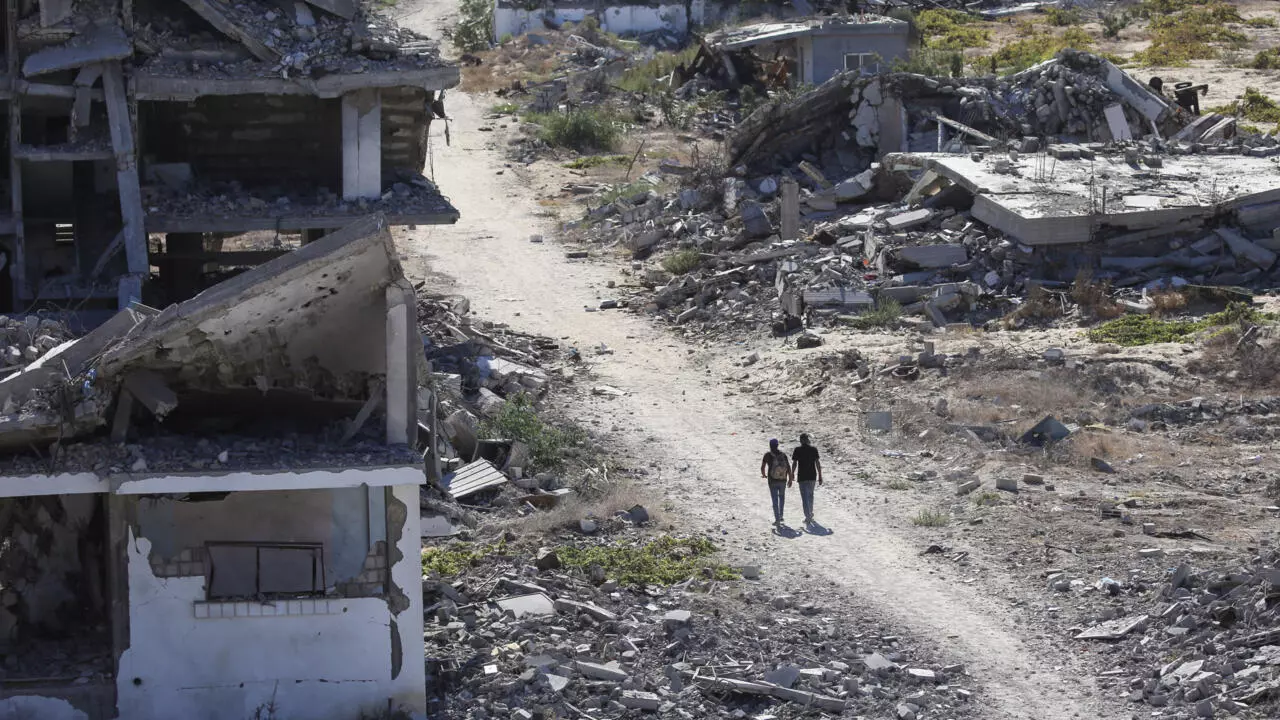
After two years of war and devastation in the Gaza Strip, the fragile ceasefire that kicked in a week ago on Friday has brought a measure of calm to the Palestinian enclave.
But even as humanitarian aid starts to trickle in, Gazans continue to face immense challenges in the war-ravaged territory, where sporadic gunfights between Hamas militants and rival groups have replaced the relentless clamour of Israeli bombardment.
Bahaa Zaqout, a humanitarian worker who lives in Deir al-Balah, in the centre of the strip, says “things are starting to change for the better” in Gaza, despite the continued hardship and lawlessness.
“It’s fair to say the situation is much better than it was a week ago,” he tells FRANCE 24. “People have started to breathe again.”
Aid trucks enter ‘without being looted’
Zaqout says the end of military operations is “a source of relief” for Gazans exhausted by two years of war. He says food is starting to arrive “in quantities” and aid trucks are now able to enter the enclave “without being looted”.

The UN declared a famine in parts of Gaza in late August, an assessment disputed by the Israeli government. The ceasefire deal brokered by US President Donald Trump called for a significant increase in aid once the fighting stopped.
The Israeli army, which controls all access to the Gaza Strip, currently allows trucks carrying humanitarian aid to enter mainly through the Kerem Shalom crossing in the south. Aid groups have repeatedly urged it to allow more in, as stipulated in the ceasefire agreement.
On Thursday, Israeli Foreign Minister Gideon Saar said he “hopes” the Rafah border crossing, a vital link between Gaza and Egypt, will reopen on Sunday. But Israeli military officials earlier warned that the crossing would open “for the movement of people only”, excluding aid.
‘Almost no houses left undestroyed’
Meanwhile, Gazans displaced by the war are scrambling to find some form of shelter before the coming winter, says Zaqout.
“There are almost no houses left undestroyed in Gaza City, in north Gaza in general, and in Khan Younis,” he says. “So, yes, the situation is much better. But we wait for new interventions to start the reconstruction process. Especially starting by removing the rubble from areas that the Israelis have withdrawn from.”

In mid-September, the Israeli army launched a large-scale ground offensive in Gaza City – designated as one of the last Hamas strongholds – and concentrated its bombardments there. Displaced residents who have returned in the wake of the ceasefire often found only rubble where their homes once stood.
Aerial images of the enclave reveal a bombed-out landscape of desolation. Earlier this year, before the latest Gaza City offensive, the UN estimated that around 92% of residential buildings in the strip had been damaged or destroyed since the start of the war.

Zaqout says his parents had “given up” on returning to Gaza City after Israeli bombardment destroyed both their home and another they had sought shelter in.
“Many people cannot go to Gaza City because of the unprecedented destruction there,” he says. “Those who left north Gaza in recent months have stayed in the south because they have nowhere to go. They are all waiting for aid organisations to start delivering tents (...) to install near their destroyed homes.”
Summary executions
Asked about the security situation, Zaqout says “all Gazans are concerned that Hamas is starting to assert power again, especially in the areas that the Israelis have withdrawn from”.
Read moreAs Israeli forces withdraw after ceasefire, Hamas tightens its grip on the streets of Gaza
The Islamist militant group that has controlled the coastal strip since 2007 made an ominous comeback on October 14 with the public execution of alleged “collaborators”, which was filmed and posted on the group’s social media accounts. Since the ceasefire came into effect, Hamas has fought bloody gunbattles with rival armed groups, despite its disarmament being a key component of the US-brokered peace plan.

On Monday, Trump suggested Hamas had been given a temporary greenlight for internal security operations, saying the group wants “to stop the problems” and “we gave them approval for a period of time”.
“We were a little bit relieved after the announcement from Trump that this is agreed to try to take control over the situation in Gaza,” says Zaqout. “But still, the concern is there. There is shooting every day,” he cautioned.
“Hamas is trying to take control of all the Gaza Strip,” says the humanitarian worker, noting that the militant group “was able to enter Khan Younis, which is still under Israeli control”.
Given the continued lawlessness, Zaqout is reluctant to take his children outside, preferring to wait for further improvements.
“I know they need to get out, see other people and play with other children. But we have to be a little patient,” he says. “We’ve been through 24 months of this dreadful war. It won’t hurt to wait another week or two.”
This article was adapted from the French original. The interview has been lightly edited for clarity.